Despite popular conception, federal law enforcement does not start and end with the FBI. Crime fighting is a governmentwide project, with career possibilities across numerous entities.
As an inspector for the Federal Protective Service, former Marine Cpl. Brian Desens helps secure courthouses, monuments and federal offices. “It’s an opportunity to keep serving my country,” said Desens, a rifleman who left the service in 2011 and now works in the FPS office in Tacoma, Washington. “It’s for a good purpose, safeguarding federal employees and safeguarding the people who come into these buildings for help, who need the kind of help that government can give you.”
Other federal law enforcement entities include the Drug Enforcement Agency and the Bureau of Alcohol, Tobacco, Firearms and Explosives.
Line of fire
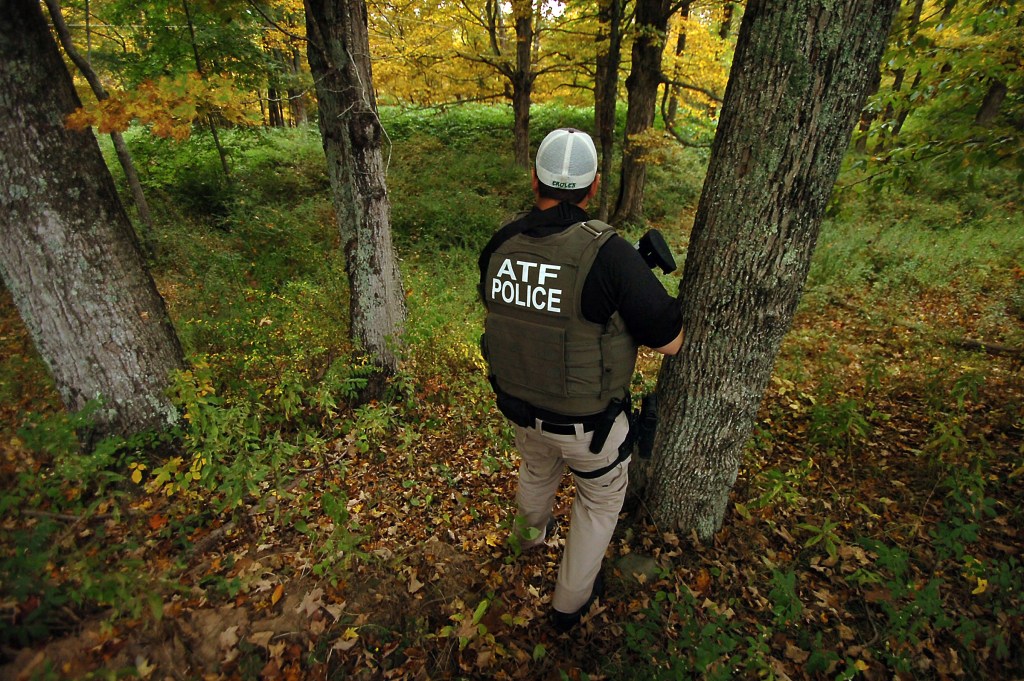
For a special agent in the ATF, daily work is a boots-on-the-ground affair.
Special Agent Daryl McCrary, a former staff sergeant with the Air Force office of special investigations, has no illusions about the perils of ATF field work. “It is very dangerous. We were always involved in violent encounters,” McCrary said of his recent stint in Detroit. He serves today as an ATF recruitment chief.
Special agents work out of one of 25 field divisions, each of which has 10 to 15 offices. They team with other law enforcement agencies to investigate violence, set up operations and capture bad actors. But it’s not all guts and glory. Agents probably spend three hours on paperwork for every hour in the field, McCrary said. They build cases and develop the proof needed to win convictions.
A winning résumé doesn’t have to include specific law enforcement experience. ATF also looks for expertise in computers (for digital evidence recovery) as well as for people with lab skills, fire engineers to investigate arson, and explosives experts.
Tackling trafficking
The war on drugs may not grab front-page headlines these days, but the battle continues, fought largely by the DEA.
The agency is actively building upon its present muster of 5,000 special agents. The mission: “We infiltrate major drug trafficking organizations in efforts to dismantle and disrupt them as well as seize their assets,” said David Battiste, deputy chief special agent, recruitment section.
In practice, this includes a range of duties.
A day that starts with paperwork may end with a hot tip and a confrontation. Much of the work takes place on the nation’s southern border.
When Battiste ran the Eagle Pass, Texas, office, it wasn’t unusual for Customs and Border Protection to stop immigrants carrying 500 pounds or more of marijuana. DEA agents seize the evidence, set up the arraignment and, sometimes most importantly, research links to similar cases in search of smuggling patterns.
Positive media coverage has generated interest in the agency, Battiste said. This year’s open job announcement has drawn more than 19,600 résumés, up from 11,000 and 8,000, respectively, in two prior announcements.
The agency is always on the lookout for those who have served. “We reach out to military colleges, we advertise in military magazines and at any job fairs on military bases,” Battiste said. “Military experience is second to none for us. They know how to follow orders when needed, and also how to lead when required.”
Guarding the grounds
Back at the FPS, inspectors make sure buildings are safe, which may not sound exciting compared to busting up drug deals but, in fact, is anything but boring.
Even without counting White House fence-jumpers, an amazing number of people try to carry guns, knives and drugs onto federal property. In 2013, the FPS stopped more than 709,800 weapons and other suspect objects and contraband from entering federal facilities.
“We all have days where the situation lulls us into a sense of comfort, while other days things will happen that make the hair on your neck stand on end,” said Rick Swengros, deputy director for training and professional development. “There are people who are not happy with the government.”
Inspectors oversee physical security, reviewing plans and making sure cameras, physical barriers and other elements are in place. They rarely do foot patrol; some 13,000 contract guards actually man the barricades.
More broadly, inspectors handle such elements as evidence collection and criminal investigations.
On any given day, inspectors may lead a hazardous-materials operation, manage K-9 explosive detection or provide security and logistical support at high-profile events.
“That’s the most exciting part of it,” Desens said. “It’s the sense of the unknown.”