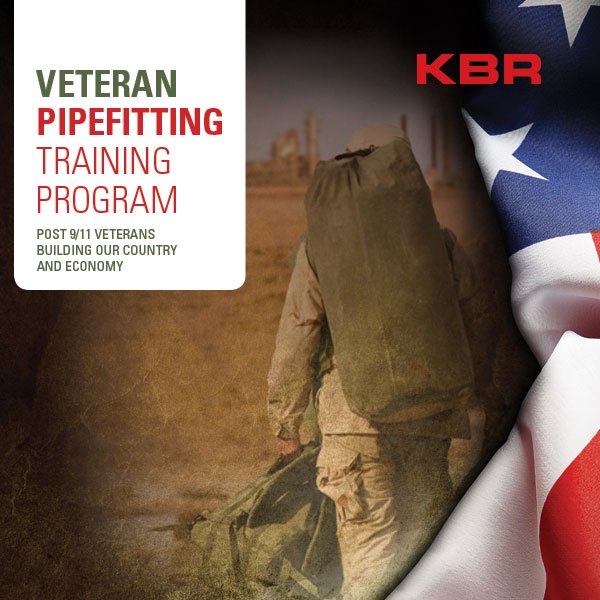
Soldiers transitioning out of the Army who are interested in an industrial civilian career can take part in a training program at Fort Polk this summer.
KBR is teaming up with Fort Polk, Louisiana, and Central Louisiana Technical Community College to offer training in the pipefitting trade. The 20 soldiers selected for the Veteran Pipefitting Training Program will learn about the industry during eight- to 10-hour days of academic and hands-on education four days a week for 16 weeks. They will report to their regular units on the fifth day. Soldiers will learn how to assemble, install and repair mechanical piping systems.
KBR will provide the instructor, CLTCC will provide the classroom, and Fort Polk’s Soldier for Life-Transition Assistance Program will screen applicants. The National Center for Construction Education and Research will provide the curriculum, and trainees will receive Level 4 NCCER pipefitting credentials after completing the program. Only those stationed at Fort Polk can participate, but the option to allow for permissive TDY is under review, said Kim Reischling, a spokeswoman for Fort Polk.
Ken Schmidt, senior vice president of construction at KBR, said leaders at Fort Polk want to spread the word to other military installations to let them know this program will be available. If there are service members interested in this program at other installations, they could transfer to Polk, train, return to their original installation and potentially find a job with KBR.
“My goal is to develop the next generation of field supervision and construction management folks,” Schmidt said.
He said that while many people can learn the craft, they don’t always have the desire to take on the responsibility of leading others. Veterans already possess that desire and have the potential to reach the level of construction manager in fewer than 10 years.
“It’s not for everybody. It’s for those that have the aptitude and are willing to move and work with their hands,” Schmidt said. “I’m looking for folks who can run our projects, and the side benefit is we’re able to offer employment to some of our discharging soldiers.”