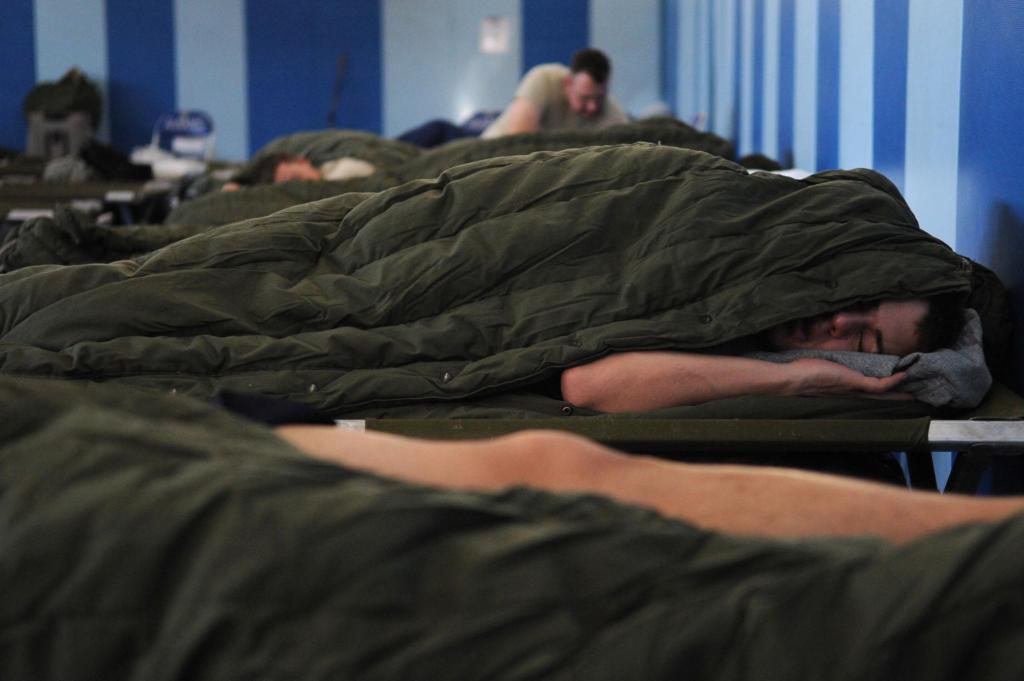
Feeling tired? You’re not alone: A new study says many service members aren’t getting adequate sleep each night.
A recent Rand Corp. study found that one-third of service members said they average five hours or less of sleep — an amount linked to an increased risk of mental and physical health problems.
The survey of nearly 2,000 troops across all services found that only 37 percent get the recommended seven to eight hours of shuteye per night, and nearly half the sample “had clinically significant poor sleep quality.” Another third said they sleep an average of six hours per night.
The report, sponsored by the Defense Centers of Excellence for Psychological Health and Traumatic Brain Injury, also noted that troops’ deployment history does not seem to be a factor in their sleep problems and sleep-related behaviors.
“Sleep problems, including poor sleep quality, short sleep duration, and fatigue, were prevalent regardless of deployment history. This suggests that sleep problems may be endemic to military culture and not solely the result of being deployed,” the report said.
About 17 percent of the service member sample reported that their sleep problems impaired day-to-day functions, and 18 percent said they use sleeping pills. About 8 percent said they drink energy drinks at least once a week to help them stay awake.
In comparison, only 8 percent of U.S. adults have reported getting five or fewer hours of sleep at night. Rand notes that the samples differ, however, because the civilian samples capture larger populations of older individuals and women.
Rand researchers said future studies are needed to examine a larger pool of service members; this survey involved only married service members.