

[ Editor’s note: The following is a guest commentary by two active-duty economics professors from the U.S. Military Academy. This is the first in a reoccurring series to educate service members on the new Blended Retirement System.]
1) Free Money!
The blended system also provides for an additional cash bonus, called “continuation pay” that you would have access to at 12 years of service. This bonus can range from 2.5 to 13 times your monthly base pay and comes with a four-year additional active duty service obligation. While you could use the money to buy a new surround-sound system, put a down payment on your dream car, or take the family on vacation, this one-time payment should be used to save for retirement. As a reminder, the maximum annual contribution for your TSP account in 2017 is $18,000, far beyond 10 percent of your annual salary.
2) It’s no longer all-or-nothing
Another benefit of the new blended plan is that you can leave the service with an established retirement account even if you do not retire. Under the current system, you must reach 20 years of active service to retire and receive a pension. (There are exceptions for those who are medically retired and have a disability rating of 30 percent or higher.) With the blended plan you still have to reach 20 years of active service to earn the pension portion of the plan, however if you are fully vested and leave before 20 years of service all of the Thrift Service Plan contributions, both yours and those of the Department of Defense, are yours to keep. This is the “defined contribution” portion of the blended plan. For any service member who does not plan on making the military a career or who wants to reserve the option to get out, the blended is quite simply a better option.
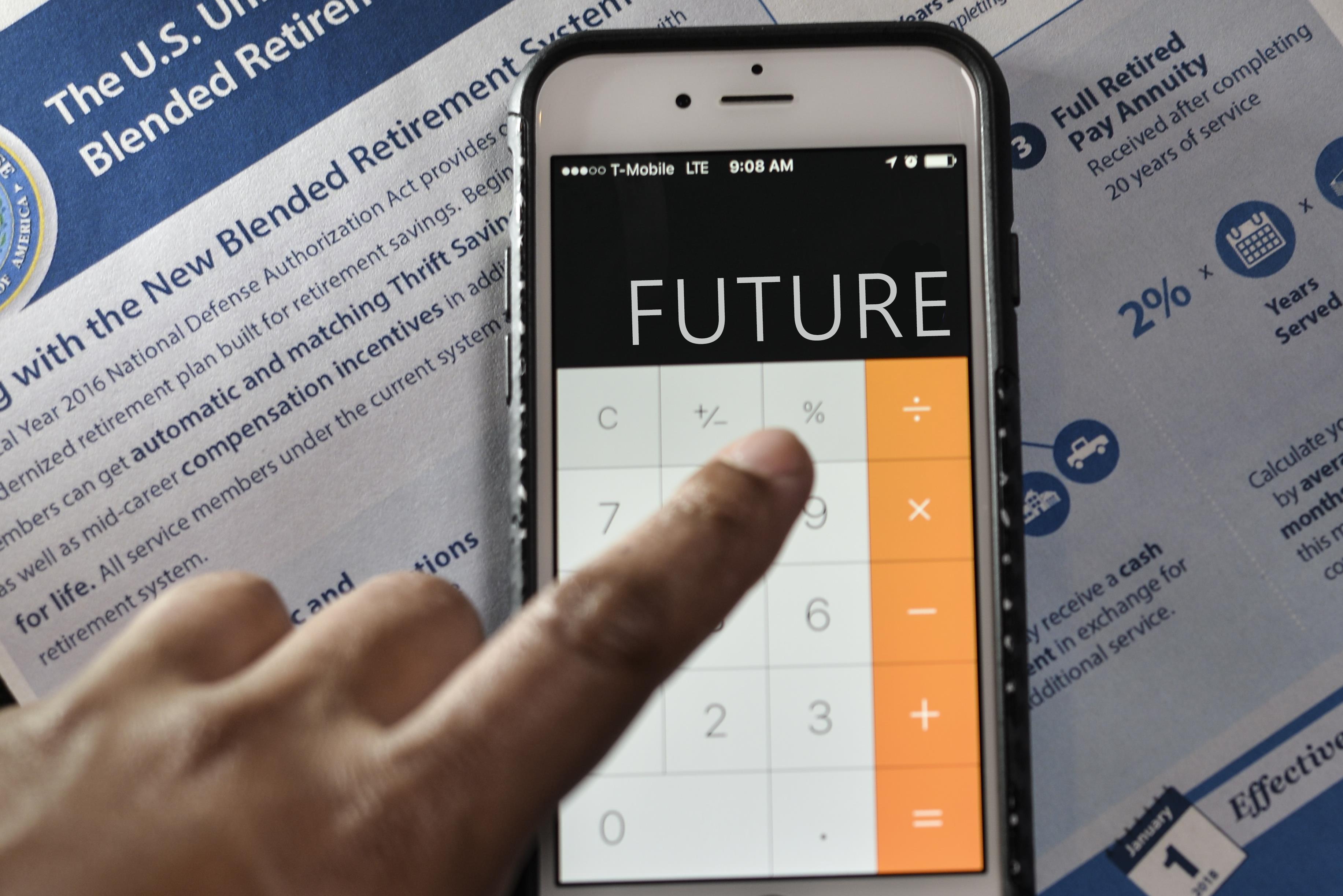
The Blended Retirement System combines service member’s traditional legacy retirement pension with distributions from the Thrift Savings Plan, creating a portable retirement option.
Photo Credit: Air Force
3) The big tradeoff
One important difference between the two plans lies in the “defined benefit,” or pension, aspect. Under the current retirement system, your annual pension equals 2.5 percent, multiplied by the number of years served and the average of your highest 36 months of pay. This pension has historically increased each year with a cost-of-living allowance to keep pace with inflation. For example, in the current retirement plan, an E-7 retiring at 20 years in 2017 would receive $26,842.80 annually, along with cost-of-living allowances. Under the blended system, the percentage drops from 2.5 percent to 2.0 percent, so that the same E-7 retiring at 20 years of service would receive $21,474.24 annually. This 0.5 percentage point difference amounts to a 20 percent reduction in the amount of the pension, or roughly $450 per month for the E-7 described above. This 20 percent defined benefit reduction will have the largest impact on service members who retire in their late thirties or early forties and do not plan on starting a second career.
4) Market Risk / Reward
5) Delayed Gratification
Both plans carry a pension, which enables you to receive a paycheck as soon as you retire. The defined contribution portion of the blended plan, money you and the Department of Defense put into your Thrift Savings Plan, is similar to a private sector 401(k) plan. While it is possible to take a loan of up to $50,000 from your TSP, in most cases you cannot withdraw funds from your thrift plan without repayment until you are 59.5 years old without a 10 percent early-withdrawal penalty. The tax impact of any withdrawal, regardless of your age, is also based on whether you have a Roth or Traditional Thrift Savings Plan account. For a 38-year-old service member who retires after 20 years of service, he or she may have to wait another 21 years before being able to access the Thrift Savings Plan funds without penalty.
Conclusion:
Over the next year we will highlight different aspects of the Blended Retirement System, or BRS, to help those of you in the “opt-in year groups” decide whether to switch to the new plan. We also hope to help newer and future members of the Armed Forces better understand which plan is best for them. As with any financial matter, the decision is ultimately yours and yours alone. No two people are the same. The solution that is right for you may not be the same for your subordinates because of different priorities and appetites for risk. We will help to explain the blended plan, and who might benefit the most from it, but in the end, only you can decide which retirement plan is in your best interest.
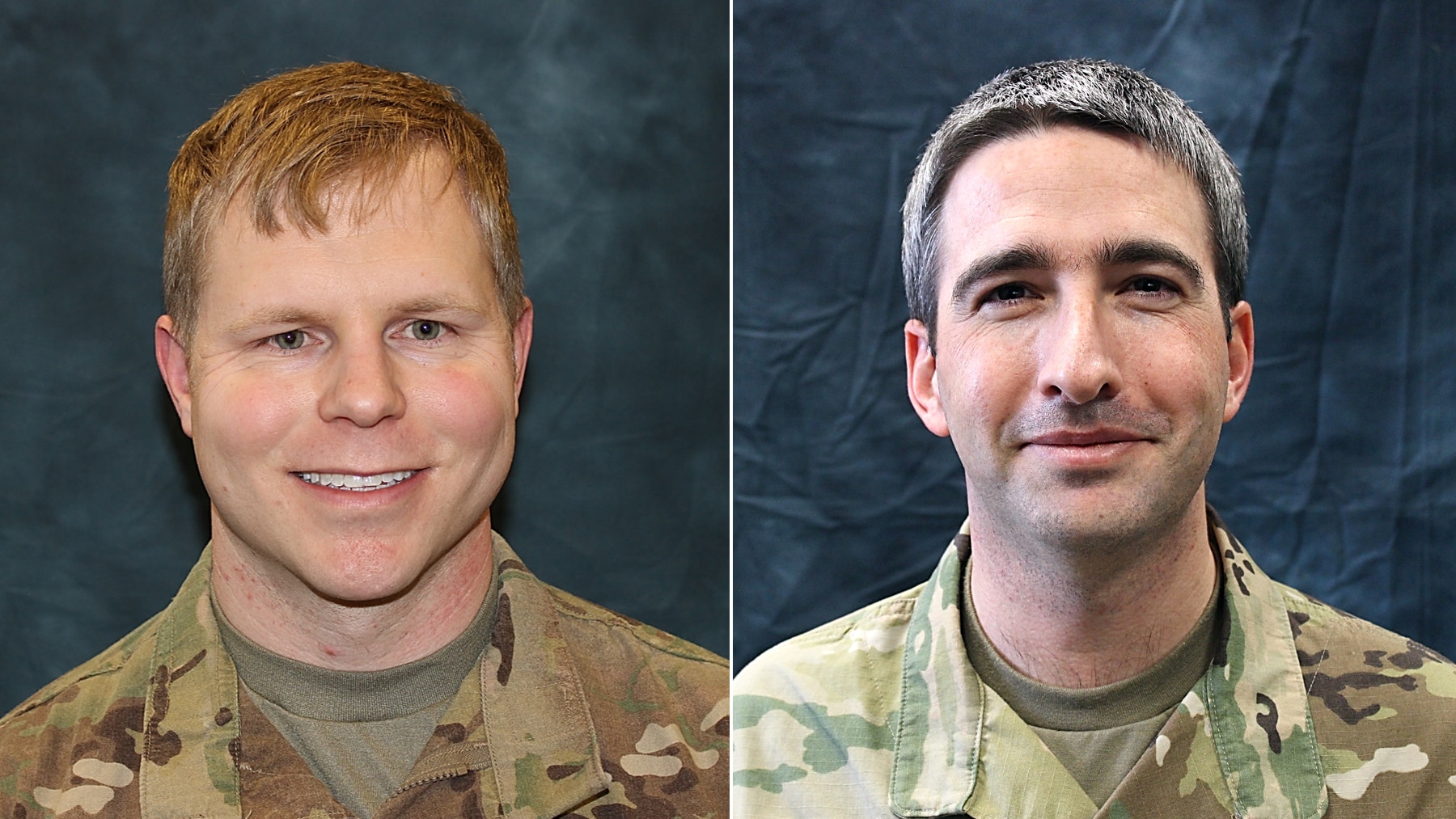
Maj. Patrick J. Bell and Maj. Evan R. Davies
About the Authors:
MAJ Patrick J. Bell, is an Assistant Professor of Economics in the Department of Social Sciences at the United States Military Academy at West Point. He is a Military Intelligence Officer with experience in unmanned aerial systems, cybersecurity, and advising foreign militaries, including two combat tours to Iraq. He holds a B.S. in Political Science and Sociology from the United States Military Academy and an MBA with Specializations in Finance, Economics, and Global Business from Leonard N. Stern School of Business at New York University.
MAJ Evan R. Davies, CFP® is an Assistant Professor of Economics in the Department of Social Sciences at the United States Military Academy at West Point and a CERTIFIED FINANCIAL PLANNER practitioner. He was commissioned as an Armor Officer and served in a variety of positions within the 3rd Infantry Division including two combat tours to Iraq. He holds a B.S. in Economics from the United States Military Academy, a M.S. in Personal Financial Planning from the College for Financial Planning and a MBA from Harvard Business School.
The views expressed are the authors’ own and do not reflect the official policy or position of the United States Military Academy, the United States Army, Department of Defense, or the U.S. Government.


