The general military training plans for fiscal 2015 bear good and bad news for the fleet.
The good: Navy officials have cut the training topics from 22 to 19.
The bad: You’ll be required to do all 19 this year, up from just 13 required courses in fiscal 2014.
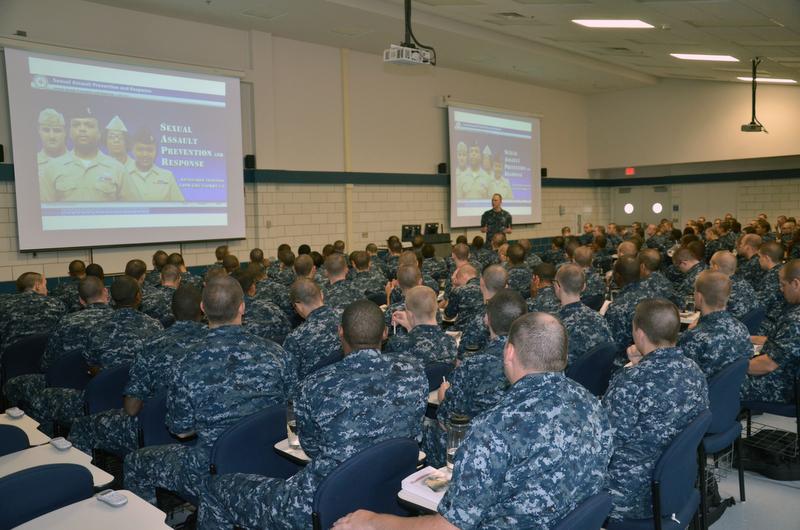
This year, commanding officers are required to ensure all 19 courses are completed. Seven must be delivered by an instructor in the classroom — considered “Category One” courses.
“We look at those courses as ones where command interaction and direct leadership makes the training more impactful, to give the outcomes we desire,” said Rear Adm. Mike White, who heads the Navy Education and Training Command, in charge of developing the courses.
In addition to the new courses, officials don’t just want anyone giving the training, according to the new GMT plan released Sept. 2 in NAVADMIN 202/14.
“Commands shall utilize senior leadership, such as chief petty officers and command training teams to deliver Category One training,” the message said. “Commands are encouraged to leverage local subject matter experts and collateral duty officers to complement the standardized training content.”
Most of the training can be taught in a single, 30-minute classroom session, training officials told Navy Times in 2013. Commands can combine topics to complete more training in a single sitting.
But this year’s requirement for personal finance training can be completed with any number of courses, including car buying strategies, credit management, home buying, and financial planning for deployment.
“Financial management has a readiness impact and if a sailor uses poor financial management, it can cost him his security clearance and the opportunity to work in his rate, so we believe it’s important,” said White, who recommends the car buying course for large commands.
All but one of the Category Two training courses can be given online. The Physical Readiness Training course is the only one of the 12 that must be done in a classroom.
Four of the Category Two courses can be given either in the classroom or taken online.
The remaining seven are only available through Navy eLearning through the Navy Knowledge Online web portal.
White said his training experts will continue to look for ways to consolidate training and eliminate redundant topics.
This year the Navy was able to eliminate its anger management course, after discovering this was covered by other training.
In addition, alcohol awareness, drug awareness and tobacco cessation were combined into a single class. But White said they might be close to reaching their consolidation limits.
“When we look at the requirements coming from higher authority, [the Defense Department and the Navy secretary] level, we’re starting to close in on the baseline number of topics,” he said. “We might be able to take things like sexual harassment, equal opportunity and hazing into a professional behavior course.”
So the next step is to assess whether the Navy should require this training every year.
“Is some of this training appropriate for every sailor, every year, or by virtue of experience and recent training, is it something that can be pushed out further?” he said. “As we start to look at 2016, this will be something we’ll take a look at.”
This year’s course load
The new general military training plan requires seven “Category One” courses to be taught in a classroom setting and 12 mandatory “Category Two” courses that can be covered online or by an instructor:
Category One lessons
■ Alcohol, Drugs and Tobacco Awareness
■ Equal Opportunity/Sexual Harassment/Grievance Procedures
■ Hazing Policy and Prevention
■ Personal Financial Management
■ Sexual Assault Prevention and Response Awareness
■ Stress Management
■ Suicide Awareness and Prevention
Category Two lessons
■ Physical Readiness Training; instructor only
■ Operational Risk Management; instructor or online
■ Sexual Health; instructor or online
■ Domestic Violence Prevention; instructor or online
■ Fraternization; instructor or online
■ Anti-terrorism/Force Protection; oOnline only
■ Combating TIP; online only
■ Operations Security; online only
■ Cybersecurity (formerly Information Assurance); online only
■ Privacy and Personally Identifiable Information; online only
■ Records Management; online only
■ Counterintelligence Awareness/Reporting; online only
SOURCE: NAVAL EDUCATION AND TRAINING COMMAND