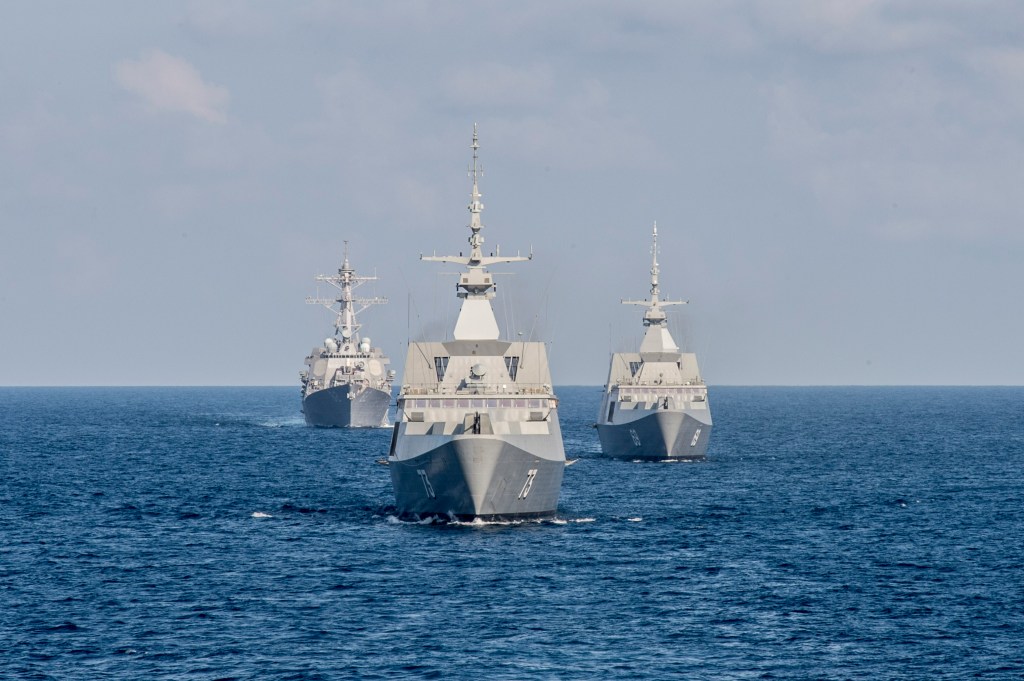
MANILA, Philippines — The Philippines on Tuesday backed a reported U.S. plan to challenge China’s territorial claims by deploying an American Navy ship close to a Chinese-built island in the South China Sea, saying it was important for the international community to safeguard freedom of navigation in the disputed waters.
The Philippine Department of Foreign Affairs said the reported U.S. plan to send a ship within 22 kilometers (14 miles) of the artificial island in the Spratly Islands “would be consistent with international law and a rules-based order for the region.”
The U.S. newspaper Navy Times reported last week that the Navy may soon receive approval for the mission to sail close to the island.
Such a move would bolster Washington’s stance that the artificial islands being constructed by China do not constitute sovereign territory and build a legal case under international law for the U.S. position, the newspaper said.
The Department of Foreign Affairs said “failure to challenge false claims of sovereignty would undermine this order and lead China to the false conclusion that its claims are accepted as a fait accompli.”
“It is important for the international community to safeguard freedom of navigation and overflight in the South China Sea,” it said. “This is of paramount concern to all countries.”
Aside from China and the Philippines, four other governments lay claim to part or all of the South China Sea, a busy passageway for commercial and military vessels. Washington has a policy of not taking sides in the territorial disputes, but says it’s in its national interest to ensure freedom of navigation and overflight and the peaceful resolution of the conflicts.
Chinese Foreign Ministry spokeswoman Hua Chunying expressed serious concern last week over the planned U.S. Navy deployment.
Former Philippine national security adviser Roilo Golez called on President Benigno Aquino III to convene a meeting of top security officials to discuss what the country should do in case Chinese and U.S. forces get entangled in an armed confrontation.
“This is a situation where a world superpower and an emerging one are about to go on a collision course,” Golez said. “We should not be caught by surprise.”