The Navy’s 2017 budget proposal spells out big job cuts for the service, including an $8.2 billion overall drop from last year’s budget and a loss of 6,300 sailor jobs.
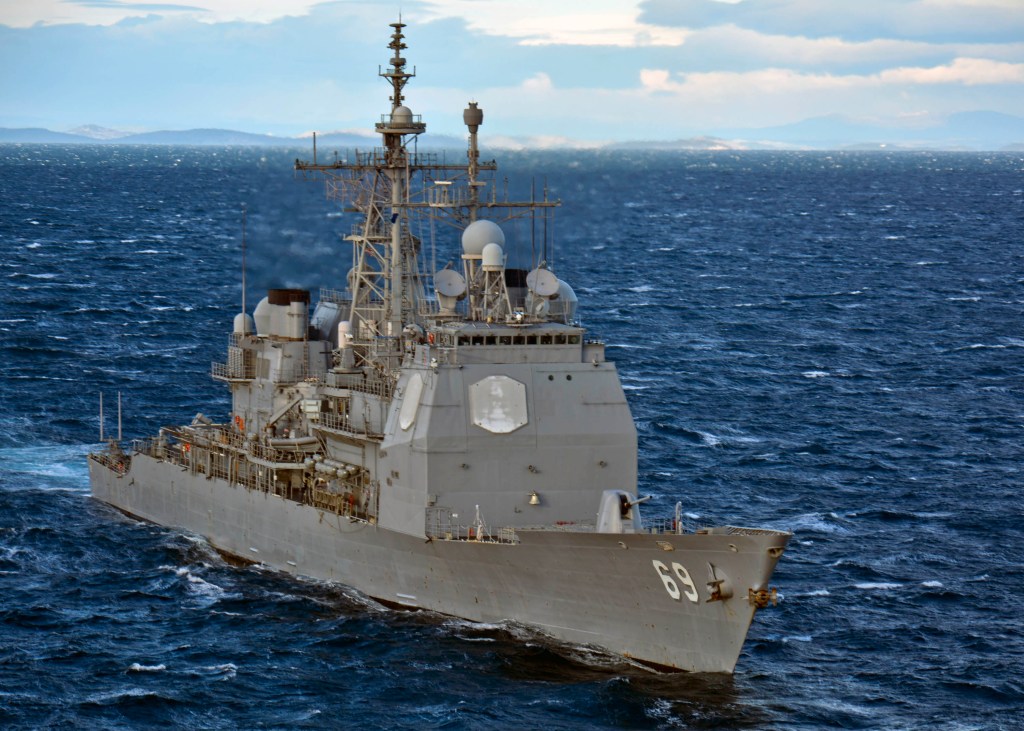
Budget pressure is forcing the Navy to buy one less littoral combat ship and to shutter three squadrons as part of the larger downsizing. It’s also trotting out a golden oldie from 2014: the cruiser modernization program, which banks manpower cuts by docking as many as half of the fleet’s 22 cruisers pierside to extend their service lives. sidelines 11 of the fleet’s 22 cruisers for modernization and life extension.
Rear Adm. William Lescher, assistant secretary of the Navy for budget, rolled out the Navy’s plan for reporters Tuesday.
Here is What you need to know about the Navy budget unveiled Tuesday:
1. Sailor jobs. The Navy is shrinking from 329,200 billets to 322,900 billets in 2017. A big chunk of the 6,300 jobs come from cutting the Carrier Air Wing 14 based in Lemoore, California, as well as its five associated squadrons.
“This proposal will allow the Navy to match the number of air wings to the number of deployable aircraft carriers,” Rear Adm. William Lescher said in a Tuesday Pentagon briefing to reporters. “It reflects the practice of having one carrier in refueling and complex overhaul, and one carrier in an extended maintenance availability at any time.”
The deputy assistant Navy secretary for budget Lescher said the aircraft would be divvied up between the remaining squadrons and would boost readiness among the squadrons by reducing the dwell time between deployments, which can be up to four years for wings attached to carriers in RCOH.
The Navy is adding billets for installation security and for helicopter mine-hunting squadrons, as well as boosting officer manning levels, Lescher said.
2. Building ships. Today’s budget rollout capped a rough three months for the littoral combat ship program, that started with the December breakdown of the Milwaukee on its voyage to San Diego, and ended today with the announcement that the Navy planned to scrap plans to buy a third LCS in 2017.
The service is asking lawmakers for billions to buy is requesting two LCS, two destroyers, two Virginia-class submarines and one amphibious assault ship.
3. New aircraft. The Navy is boosting its maritime patrolspy plane fleet in 2017, buying 11 P-8A Poseidon aircraft. It’s also snagging two F/A-18 Super Hornets to replace combat losses, as well as four carrier-launched F-35Cs.
On the unmanned side, the Navy is buying two long-range MQ-4 Triton surveillance drones, as well as another MQ-8C Firescout and eight smaller RQ-21A Blackjack drones.
4. More missiles. The Navy is pushing forward on the joint air-to-ground missile, purchasing 96 of them in 2017. The JAGM is the follow-on to the venerable Hellfire missile that can be found on the wings of everything from the Navy’s SH-60 helicopters to the Air Force’s Predator drones.
The Navy is also buying 100 modified Longbow Hellfire missiles as an anti-ship missile for the LCS. Additionally, it plans to buy the first 10 long-range anti-ship missiles, which can be launched from a fighter or modified for ship launches.shipboard use.
The Navy is also buying 125 SM-6 missiles, which Defense Secretary Ash Carter said in early February would be used as a long-range anti-ship missile as well as and mid-air interceptor.
5. Docking more cruisers. The Navy is renewing its request to park half its cruisers pierside for as long as years to save on manpower costs and to ensure these ships can be used well into the coming decades. back to asking congress to put away 11 of its cruisers as a way of saving money and easing some of the manning issues on the waterfront.
“This is an approach that leverages the saving of over $3 billion over [the next five years] in operating costs and maintains the best overall force balance,” Lescher said. “It retains the air-defense commander capable platforms in the force into the 2040s and allows us to reallocate personnel elsewhere in the fleet.”
The cruiser phased-modernization plan, designed to keep the cruiser’s air defense command capability in the fleet beyond the service life of the hull, would have put 11 of the fleet’s 22 cruisers in lay-up pierside. Then, as the Navy decommissioned one of the 11 in the active fleet, it would return a newly modernized cruiser to the fleet to hold the cruiser fleet at 11 until the service finds a suitable replacement for the top-of-the-line surface combatants.out of lay-up and put it back in the fleet, holding the number of cruisers at 11 until the Navy finds a suitable replacement for its premier surface combatant.
But lawmakers, including Rep. Randy Forbes, R-Virginia, have been skeptical of the plan because of the Navy’s recent efforts to prematurely retire the cruisers to save as a way of saving money. Forbes signaled his concern to see the Navy put forward the full plan, which lawmakers have blocked for two years. quick to signal his concern about seeing the Navy put forward the same plan as 2014, which was rejected two years running.
“I am particularly bothered that it seems that the Navy is being forced once again to lay up half its cruisers, breaking faith with Congress and depriving the fleet of air and missile defense capacity that is going to be in more demand than ever,” Forbes said in a statement.
Both the cruisers Cowpens and Gettysburg were both put into modernization in 2016 and are now manned by stripped down crews and led by a lieutenant commander commanding officer. Chosin and Vicksburg are slated to go into modernization this year, as well as a dock landing ship.