For soldiers on the ground, Increment 1 of the Warfighter Information Network-Tactical has provided a vital communications link. Increment 2 promises command and control capabilities on the move, while Increment 3 aims to provide unified network control.
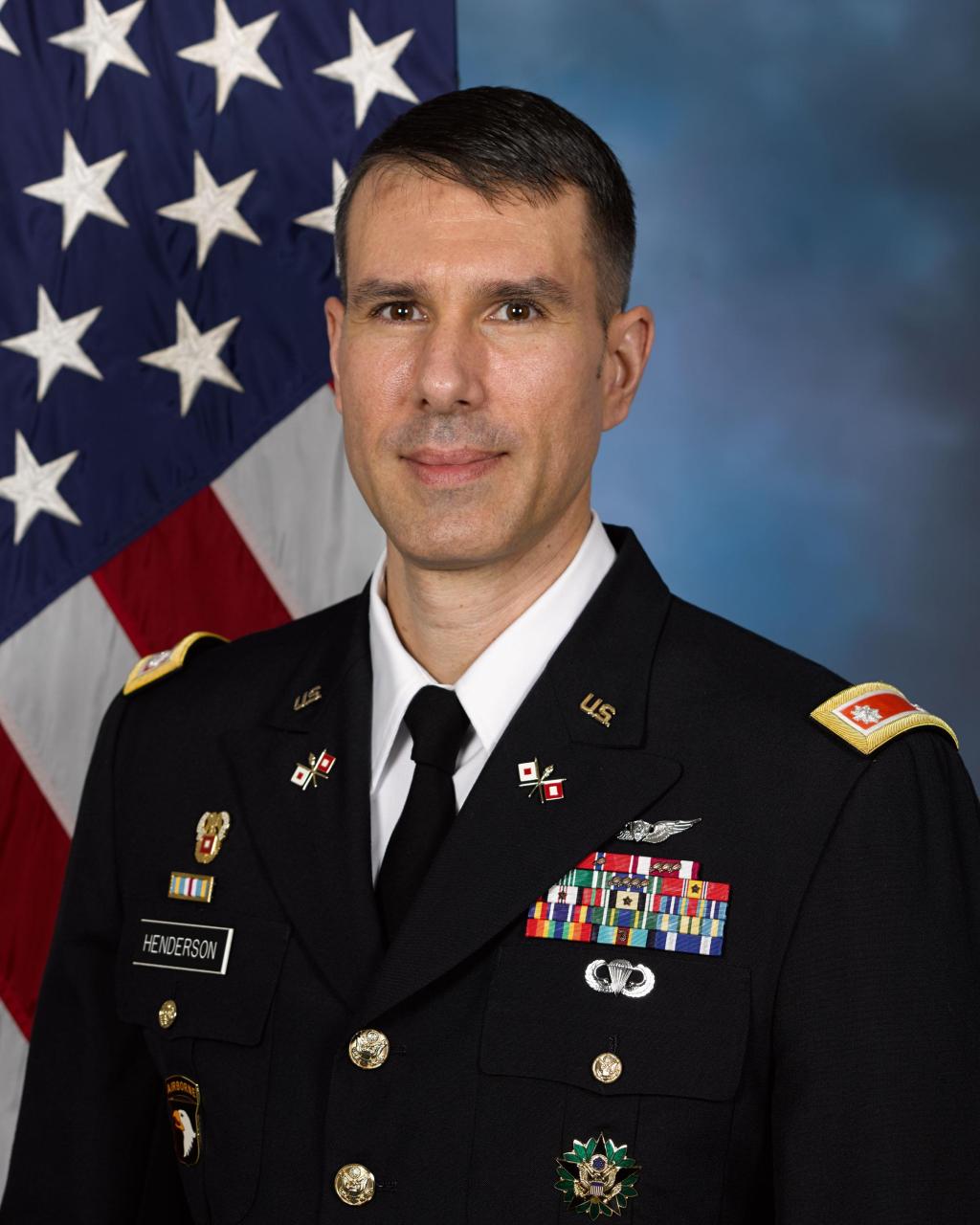
In the long run, it will all be just one big increment, according to LTC Mark Henderson, WIN-T Increment 1 product manager for the Army’s Program Executive Office Command Control Communications-Tactical.
During a C4ISR & Networks webcast, Henderson suggested the Army’s end game is to unify the evolving increments for seamless interoperation. WIN-T ultimately will be “an enormous blanket that covers the tactical battlespace, that enables soldiers to communicate at all levels,” he said. “We are working beyond Inc. 1, 2 and 3 to be able to unify the system completely.”
Henderson is responsible for the development, system engineering, integration, testing, acquisition, production and fielding activities for an Army Acquisition Category IC Major Defense Acquisition Program and seven other Army programs with budget of $1.6 billion.
His drive toward a unified communications infrastructure comes at an ideal time, said James Hooper, corporate vice president for business development at SES Government Solutions. The Army faces intense pressure to “move, shoot and communicate more effectively than the enemy,” he said. “This becomes even more important as the size of the Army shrinks, while our global commitment and the threats out there have not.”
One significant outcome of a fully integrated WIN-T network would be the ability for soldiers on the ground to gain easy access to information.
Even as technology becomes more complex, the Army needs manageable interfaces. “If you can make technology work at such a point where you have interfaces that are more simplified, that are more clear, where soldiers can understand it much more quickly, much more easily…that is something on all of our minds,” Henderson said.
All these efforts to unify and simplify should generate new contracting opportunities for industry. Henderson did not offer specifics, but in response to questions he made it clear that the commercial world will likely have a significant role to play in the evolution of WIN-T.
“There are always going to be opportunities related to industry,” he said. “Technology is constantly evolving and we are aware of this. We are constantly looking at what is available [among potential vendors] and what we can leverage to enable what’s coming next.”
While battlefield awareness is the foremost aim of WIN-T, Henderson spoke at some length about another potential use of the emerging network. As WIN-T comes together, he said, the Army will be able to play a greater role in responding to humanitarian crises.
“How we react to what Mother Nature does defines us,” he said.
In times of crisis, WIN-T could go live as an emergency support to the National Guard as well as first responders in the states and territories. “Just when things could potentially be at their worst, we will be able to pull out some game-changing technology to be able to turn things around and get things on the up and up,” he said.
“If there is a typhoon or if there is some sort of a crisis where all communication is destroyed…how do we recover and how do we recover quickly? [WIN-T] is something that, if directed, could be a significant part of that answer. Whatever the Army directs, we’ll be ready,” he said.
Driving all these advances will be significant improvements in the size, weight and power of WIN-T’s physical components, with the system expected to lose considerable bulk in the near future. “The more something weighs…the less you can carry,” Henderson said. “So the more efficiently you can bring technology into the equation to modernize capabilities, where you are actually shedding weight, you are using less power on the individual systems and there is less stuff. That is a great thing.”