Digital models will be critical for interoperability and the joint force going forward.
The Navy has embarked on an analysis of alternatives, or AOA, for the next generation of the air dominance family of systems, according to Vice Adm. Paul Grosklags, commander of Naval Air Systems Command.
During that process, he said April 3 during the Navy League’s Sea Air Space conference, the service is taking digital models of the threat and the environment they’re going to be operating in, then examining what capability gaps exist.
This digital element is going to be critical to performing tasks in a digital environment and sharing data from beginning to end, which is something the force doesn’t do well today, Grosklags said.
Looking beyond the competition of the AOA, Grosklags said the Navy will begin an integrated warfare analysis, sitting down with the fleet and figuring out what concept of employment is needed to address capability gaps.
While typically they’d take these models and analyses to industry and ask them to build something, the military can’t do that anymore, said Grosklags. Rather, they must present industry with the data and digital models and request solutions be built starting with certain baselines that take into account the threat environment, the friendly environment, etc.
Across the services, capabilities are rarely funded, he noted. Instead, they fund platforms that might bring in capabilities. To engender greater interoperability, the force needs to view this as a system engineering problem, starting from day one with an end state in mind.
Grosklags said that because the traditional acquisition cycle can sometimes take years, making solutions obsolete against the threat they were designed to counter in today’s fast-paced digital world, it is imperative that systems be flexible and interoperable.
Autonomy and interoperability
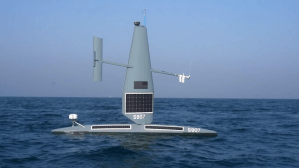
Grosklags also discussed the emerging autonomous systems being employed by the Navy. Interoperability is inherent in autonomy, he said, as data must be passed back and forth to various command and control systems.
Additionally, they have to have the ability to download the data they collect not only to Navy systems, but to the Coast Guard, Army, Air Force and in some cases, coalition partners, he added.
Digital models will be critical for interoperability