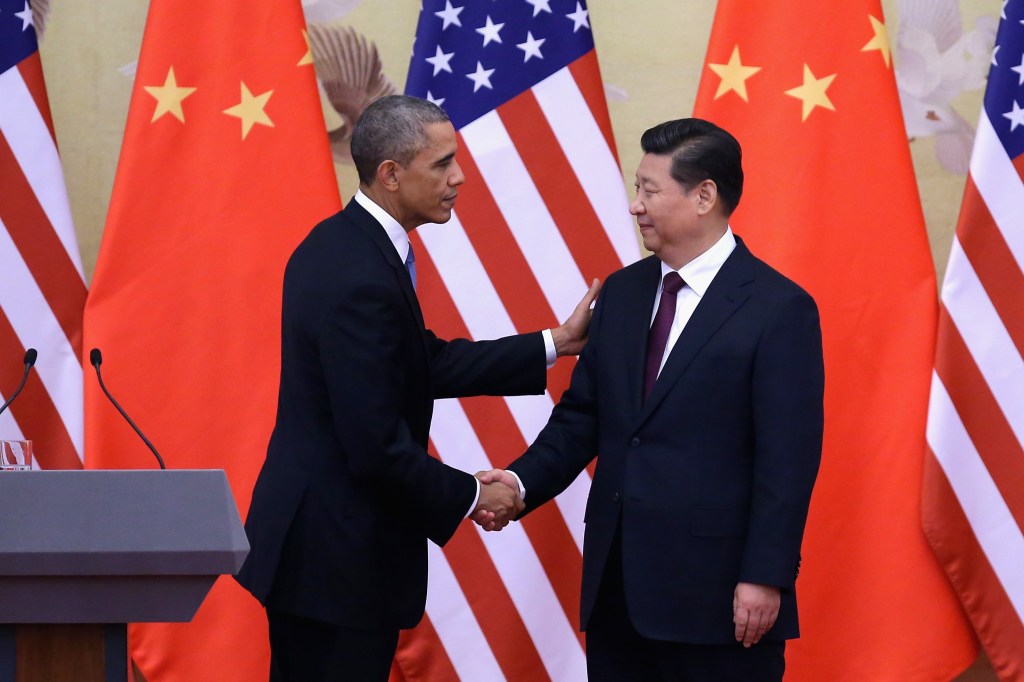
While the U.S. and China in September reached a “common understanding” to stem China’s ongoing cyber theft of U.S. intellectual property, the deal focused on economic interests – and left unaddressed the onslaught of attacks on the government, many of which are attributed to China.
That may not come as a surprise: Cyber is just one part of the delicate and fraught diplomatic relationship between the U.S. and China. That’s one reason why the former director of the National Security Agency and U.S. Cyber Command says the government should instead focus on shoring up its cyber defense.
In both government espionage and economic theft, “our first step should be to fix our defense. I think what the White House and others are doing is as much as you can do diplomatically,” retired GEN Keith Alexander said in an interview with C4ISR & Networks. “But I think that’s a tough thing for China in a couple of ways. They have huge economic problems. How do they fuel their economy? It takes intellectual property, and if we leave ours completely out there in the open, people are going to steal it.”
The Defense Department’s cyber strategy released in April specifically highlights China as a prime cyber thief and calls for increased deterrence measures. But that document also focuses on the theft of intellectual property, rather than nation-state attacks or those like the Office of Personnel Management breach that exposed the personal data of more than 25 million people. It is believed that China was behind the OPM breach, in which personally identifiable information and even fingerprints were stolen.
In DoD’s cyber strategy, Pentagon officials held up at least one previous breach with the goal of making it an example for the future.
“The United States used verifiable and attributable data to engage China about the risks posed by its economic espionage. The attribution of this data allowed the United States to express concerns regarding the impact of Chinese intellectual property theft on U.S. economic competitiveness, and the potential risks posed to strategic stability by Chinese activity,” the strategy states. “Because they broke the law and to deter China from conducting future cyber espionage, the Justice Department indicted five members of the People’s Liberation Army for stealing U.S. intellectual property to directly benefit Chinese companies. The Defense Department will support the Justice Department and other agencies in exploring new tools and capabilities to help deter such activity in cyberspace.”
But the complex diplomatic relationship between the U.S. and China makes it difficult to fit the nation into a cyber strategy – or any blanket policy, a point Alexander noted.
“We have a lot of important issues with China; how important do you put cyber on the list of priorities?” said Bill Lynn, the former deputy Defense secretary who rolled out the first DoD cyber strategy in 2011. “It’s a tense issue with China at this point. They deny everything. We have a lot of trade relationships with China, we have a lot of security relationships with China, we have important diplomatic and economic relations. There is a risk to our economic vitality from the sapping of intellectual property, but there’s also a risk in our relationship with China from challenging them on this. I think we have to, though, and hope it doesn’t cause irreparable damage. I don’t think we can ignore it.”
Though the new strategy does not address a scenario in which China steals quantities of government information, it does stress the need for continued dialogue, echoing Lynn’s sentiment. The strategy highlights ongoing discussions under efforts like the U.S.-China Defense Consultative Talks and related dialogues, such as the Cyber Working Group.
“DoD will continue to hold discussions with China to bring greater understanding and transparency of each nation’s military doctrine, policy, roles and missions in cyberspace. The goal of this work is to reduce the risks of misperception and miscalculation that could contribute to escalation and instability,” according to the document. “DoD will support U.S. government efforts to strengthen confidence-building measures to bring a greater level of trust to the U.S.-China relationship.”