The National Defense Authorization Act remains in limbo since passing the House and the Senate and now en route to the president’s desk – where it could face a veto, which could get a congressional override. That leaves questions marks on the line items of an untold number of programs across the Defense Department, some with hefty price tags and prominence; some with smaller but still-important prospects.
Tucked into the Senate version of the NDAA that also made it into the House conference report is DoD’s technology offset program, or the TOP, which is intended to build and maintain U.S. technology superiority, according to Deltek’s Alex Rossino in an Oct. 13 blog post.
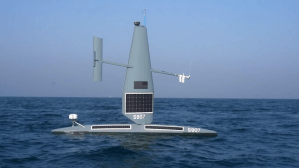
The TOP provision routes some $400 million toward “offset technologies,” which include directed energy (aka: lasers), low-cost high-speed munitions, autonomous systems, undersea warfare, cyber technology and intelligence data analytics. Half of that must go to directed energy, with the rest of the money spread among the other five areas, Rossino noted.
Intelligence data analytics are a hot topic right now as DoD and the intelligence community look to create actionable intelligence out of the volumes of data coming from sensors deployed all over the world and the web. Data analytics could mean anything from sorting through imagery sent from satellites and drones down to inputs from the ground in the theater.
Officials at the Defense Information Systems Agency hope big data analytics can give them a boost in network and cybersecurity, especially as the agency moves toward centralized internet access points, where DISA networks connect to the web. That means there’s a heavy reliance on identifying threat signatures as early as possible.
“We need the capacity to stay up with those signatures, and we use big data analytics to analyze changes in the environment that we can recognize from the signatures, and maybe deviations or derivatives of that signature, to stay up on what could come next,” John Hickey, DISA risk management executive and CIO, told C4ISR & Networks in a recent interview. “And I think that’s the biggest challenge at the Internet access point standpoint, and in general everywhere. How quickly can we identify new signatures and deploy [countermeasures] to all your devices?”