In the wake of the recent attacks in Paris, some U.S. lawmakers and agency leaders are pushing to resurrect controversial techniques for gathering data on individuals, including potential terrorists using technology to plot attacks.
Since the attacks, legislators such as Sen. Tom Cotton (R-Ark.) have pressed the government to stop the rollback of broad surveillance powers under Section 215 of the PATRIOT Act, a move slated for the end of this month. Cotton’s newly proposed legislation would postpone the end of bulk collection allowed under Section 215; it’s backed by insiders such as former NSA lawyer Stewart Baker, according to TechDirt, which described the legislation as “surveillance state apologists gleefully exploiting the Paris attacks to try to claw back this very, very minor victory against mass surveillance.”
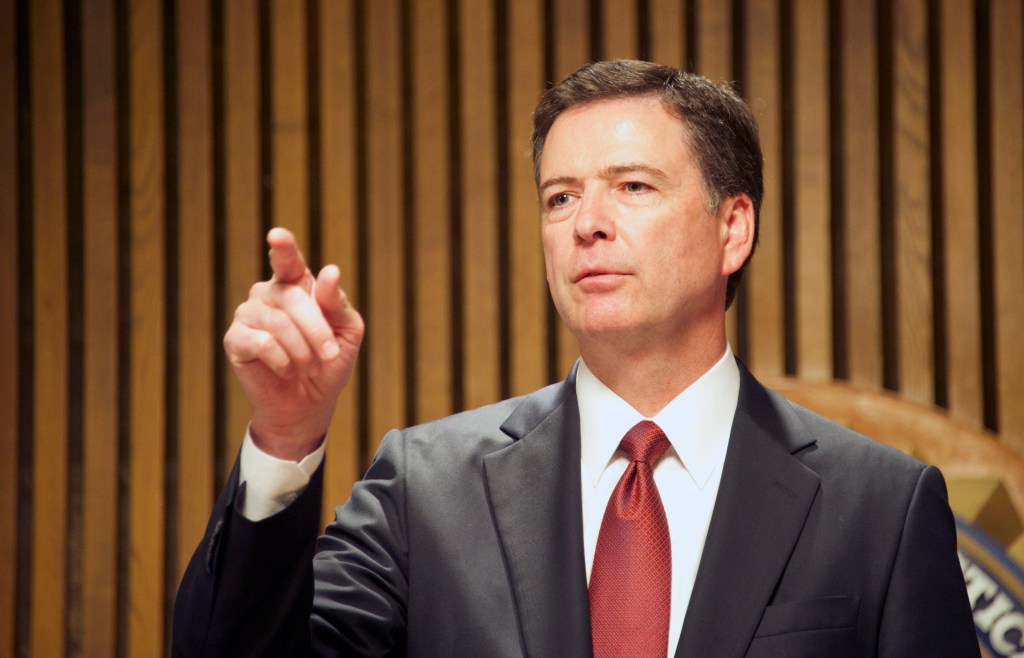
Across town – or in this specific case, at a speech in New York Nov. 18 – FBI Director James Comey renewed discussion of forcing technology companies such as Apple and Google to build “back doors” into its products that would, theoretically under court order, allow government officials to access customers’ data, such as text and data from the smart phones or Google searches. Today that data is encrypted, which is another hurdle Comey and those with views similar to his say they need to clear for faster access.
“With lack of cooperation, we are left with 50-foot-high walls on either side,” Comey said, according to the New York Times. “We have to get to a place where we push information to each other at a pace that moves with the speed of the threat.”
But privacy proponents vigorously disagree with Cotton, Comey and others railing against encryption on the basis that the Paris attackers purportedly used encrypted communications to plan the attacks – which has not been proven. According to published reports, at least one cell phone found after the attacks on the Bataclan theater in Paris contained unencrypted text messages related to the attacks.
Privacy advocates argue that measures to override encryption and use mass surveillance that would yield large data sets are ineffective and infringe on Americans’ rights.
“Terrorism is far more difficult to predict than the purchasing or other patterned behavior that big data is reasonably good at identifying. Forget trading essential liberty for a little temporary safety: when it comes to identifying terrorists, mass surveillance leaves the public with neither,” Electronic Frontier Foundation Executive Director Cindy Cohn wrote in a Nov. 19 blog post. “The attack on strong, non-backdoored encryption would make Americans, and people all over the world, less secure. Every serious computer scientist has pointed out that there is no such thing as a back door that only good guys can go through. And at least so far, the information we’ve received is that end-to-end encryption wasn’t even used here.”