The Defense Department and service components in recent years have released many documents, directives and guidance on operating in cyberspace, and a common goal in most of them includes reaching a consensus in the language and terminology used for the cyber domain. But it’s not as simple as issuing doctrine and calling it a day, according to Navy officials.
In the Navy, the relatively longtime use of the term “information dominance” is changing, and it reflects a broader trend as the service evolves in how it defines cyber operations writ large.
“It is a work in progress as far as information superiority, information warfare, information dominance,” VADM Ted Branch, deputy chief of naval operations for information warfare and director of naval intelligence, said Feb. 17 at West 2016 in San Diego, California. Chief of Naval Operations ADM John Richardson “has interesting thoughts about superiority, supremacy, dominance – he particularly doesn’t like dominance in any area…he says that when you label an area that way implies you’re finished, pencils down, you’re done. He doesn’t want that mindset – he wants everyone to embrace the idea that we have much work ahead of us across the board.”
“We have multiple services because we have different domains we’re focused on,” Tighe said. “In the maritime domain we have necessarily organized around skills sets and missions that are more related perhaps in the maritime domain more than others…when [information warfare] is not defined in joint doctrine that’s not necessarily a bad thing. I think it allows us to define what that is in what we do and why we do it. Ultimately what we do will define what information warfare is, as opposed to how we define it in words or how we might define it in doctrines.”However, it’s inevitable that there will be differences in the terminology used to describe operations, especially when looking across DoD, VADM Jan Tighe, commander of Navy Fleet Cyber, pointed out.
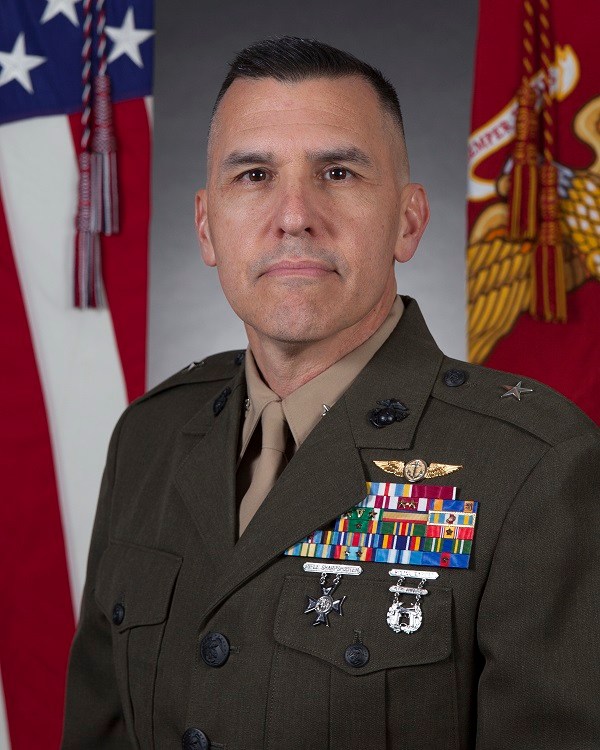
The wording behind the Navy’s information warfare operations may be changing, but leaders need to maintain a balance between heavily nuanced language and vague, all-encompassing lexicon, the Marine Corps’ CIO said.
“One of the dangers of making something too special is it becomes too special. From a combatant commander’s perspective if you categorize some of these activities for organization it makes sense, but in execution if it starts to look too different, if it starts to look like things that don’t have the same language…it’s very hard to execute,” BGen Dennis Crall said. “You can end up with a well-organized, well-resourced apparatus that does no good when you can’t get into the fires cycle because it uses terminology warfighters can’t understand, that doesn’t debrief properly, doesn’t have measures of performance or measures of effectiveness. So to me there has to be a sensitivity to balance.”
SHOW REPORTER: See more from West 2016.