Robots fall over and people care when it happens. It is the nature of moving machines and dependable, anthropomorphized tools. People become attached to the machines they use and worry when those machines are in peril. Those facts combine especially poorly in combat, where a toppled robot can inspire a living, breathing human to run into harm’s way to save it.
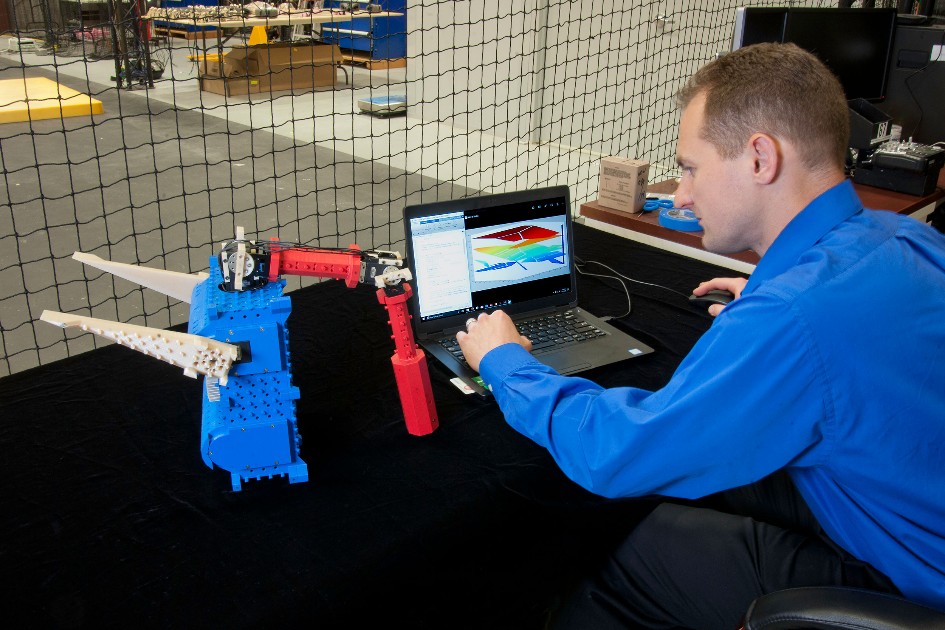
To this end, the U.S. Army Research Laboratory partnered with Johns Hopkins University Applied Physics Laboratory to develop software that lets robots get themselves up again. The research is set to be published in IEEE Robotics and Automation Letters in October.
Getting robots upright is a program requirement for the new Advanced Explosive Ordnance Disposal Robotic System, or AEODRS, which means that researchers had to figure out how, exactly, to program self-righting into a machine. By analyzing the robot’s limbs and joints, the researchers were able to determine all the possible ways a robot could rebalance itself to get back to a level, mobile orientation.
More joints means more possible ways to move, and therefore more options to process in a time crunch, so the researchers also limited the robots to searching through the orientations where a robot can fall, prioritizing the most likely paths back to upright first.
There is work ahead for the program. At present, the algorithm can get the robot upright on flat surfaces only. The researchers are working on developing software for sloped and uneven terrain, to make sure that even if robots get knocked downhill, they can get back up again.