Global anti-drone market to reach $1.9B, says report

By

FifthDomain Staff

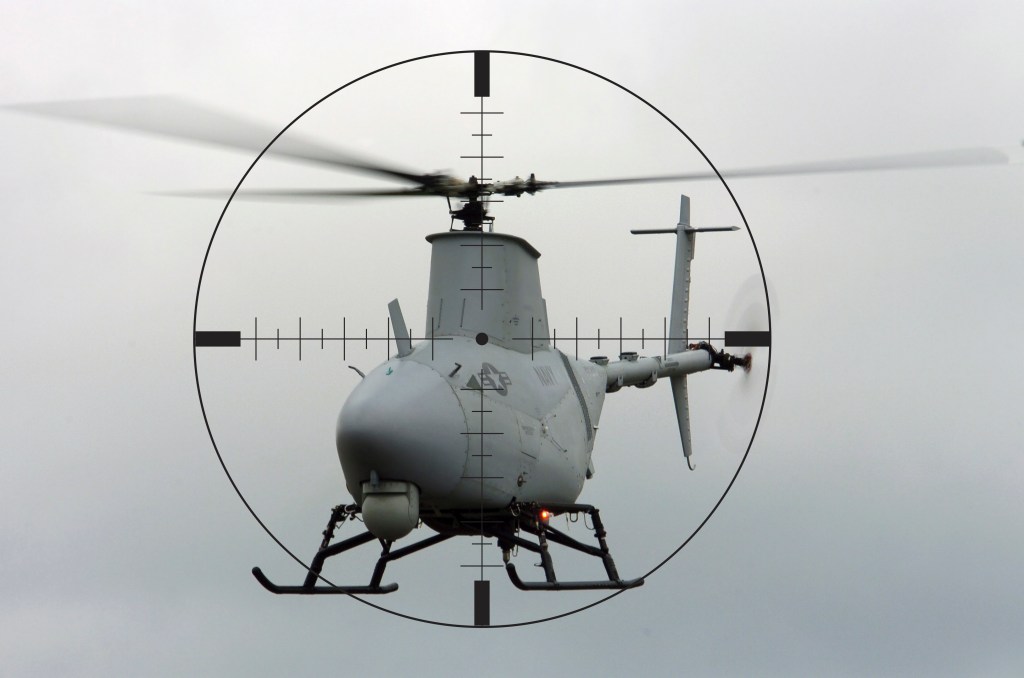
St. Inigoes, Maryland, June 27, 2005 – A RQ-8A Fire Scout Vertical Takeoff and Landing Tactical Unmanned Aerial Vehicle (VTUAV) System takes off for a flight demonstration at the 2005 Naval Unmanned Aerial Vehicle Air Demo held at the Webster Field Annex of Naval Air Station Patuxent River. Fire Scout has the ability to autonomously take off and land from any aviation-capable warship and at unprepared landing zones. With an on-station endurance of over four hours, the Fire Scout system is capable of continuous operations, providing coverage at 110 nautical miles from the launch site. Utilizing a baseline payload that includes electro-optical/infrared sensors and a laser rangefinder /designator, Fire Scout can find and identify tactical targets, track and designate targets, accurately provide targeting data to strike platforms, employ precision weapons, and perform battle damage assessment.

The global market for anti-drone technology is expected to reach $1.9 billion by 2024, according to a report by consultancy Grand View Research.

“Electronic countermeasures are anticipated to emerge as a lucrative segment over the next eight years as these measures involve the use of high power electromagnetic and high power microwave weapons to prevent successful transmission and reception of drone signals,” the report said.

The Asia-Pacific market will register the highest growth, but global spending will rise as well, according to the report.

“Various national security agencies across the world have started to precisely understand the potential threats from drones and increasingly considering commercial as well as consumer drones as the new major threat to the world,” the report said. “It is only a matter of time before redundant and reliable methods of countering drones become mainstream and widely available.”