The defeat of Hillary Clinton and the victory of Donald Trump in America’s presidential election of 2016 was a stunning surprise, not only for the global community at large, but also for America’s allies and adversaries.
Another troubling development related to that event was that there were never any serious or extensive debates over the specifics of America’s foreign policy between the two presidential candidates. Consequently, there is very little substance to go on, in terms of what to expect from President-elect Donald Trump, except for a few generalities that he iterated during his highly rhetoric-laden campaign.
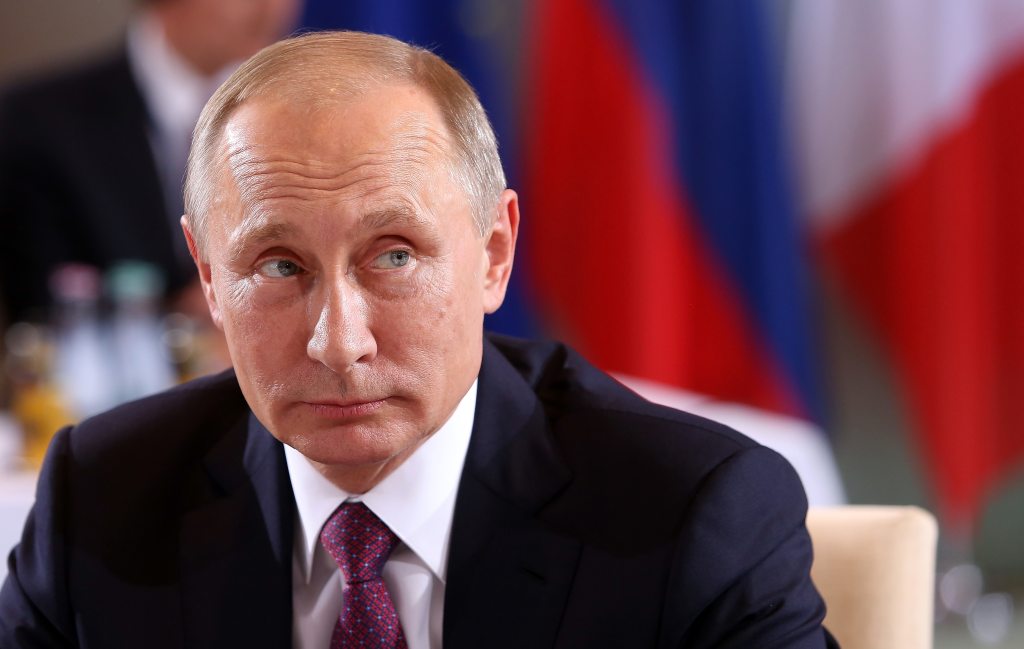
The topic of relations between the United States and Russia may be an exception to this rule, since Trump repeatedly stated that the US needs to work closely with Vladimir Putin on several major conflicting issues like Syria, Ukraine, etc. That was music to the ears of Russia’s strongman. However, when faced with the actual process of interacting with Putin, President Trump will realize that, in the final analysis, Putin is likely to be no less hardnosed toward him than he had been in dealing with President Barack Obama.
As President Obama observed after meeting with Trump, he is pragmatic. In that capacity, he would be well advised to incorporate the advice of Henry Kissinger, which he proffered the president-elect during a recent interview with Jeffrey Goldberg of The Atlantic. He said: “The president [-elect] should ask, ‘What are we trying to achieve, even if we must pursue it alone?’ and ‘What are we trying to prevent, even if we must combat it alone?’ The answers to these questions are the indispensable aspects of our foreign policy, which ought to form the basis of our strategic decisions.”
Deciphering Kissinger’s advice will be a serious challenge, because the devil is in the details. It is a well-known fact that President Trump will remain preoccupied with his “America First” slogan in the realm of foreign policy. However, he will have to decide how to operationalize that slogan in Syria and Ukraine (Kissinger’s advice of “what are we trying to achieve, if we must pursue it alone?”). Is the United States willing to allow Syria and Iraq to slide under Russia’s sphere of influence for four years, knowing full well that there will be no end to that in the short run? If Trump is willing to accept that reality, then he will also have to live with the likelihood of having a drastically diminished American presence and influence throughout Middle East.
Syria is already under Putin’s hegemony. He pretty much has determined how long the Assad regime will survive. In that capacity, he has already been specifying the conditions of peace and war in Syria—the brunt of Russia’s airstrikes in Syria “has been against US-linked members of Syria’s opposition.”
Donald Trump will learn that the Russian leader is driven by Russia’s powerful aspiration to emerge as a superpower. However, instead of following the Chinese economic model of achieving the status of superpower, Putin—fully emulating the leaders of the Former Soviet Union (FSU)—has been inordinately focused on spending Russia’s precious resources to strengthen its military muscle, instead of building economic resources first and then using them to finance its military power. Trump will also learn that it is not enough for Putin to gain political influence in Syria, but that he is more likely to use that reality as leverage to further expand his country’s presence and influence in Iraq as well.
Iraq is where the Shia-Sunni conflict is palpably simmering, which threatens the future stability of that country. Iraq is also a country where there are a large number of American forces present. Trump will soon realize that if he withdraws US troops from Iraq, ISIS will once again see it as an excellent opportunity to resurge its presence and control, as it did in the aftermath of the American force withdrawal in 2011. And any withdrawal of US forces will also be an opportunity for Putin to present himself to Iraqi Prime Minister Haider al-Abadi as the next savior of his regime. These potentials aside, the overriding reality of Iraq is that an augmented Russian presence—like the increased American presence—will do nothing to reduce the intensity and potential volubility of the sectarian conflict of Syria or Iraq.
Any reduced sphere of influence of the United States in the Middle East would mean that several Arab states could contemplate seeking Russia’s friendship and even presence, if not inside their borders, at least within close proximity. No American president will allow that. The US Congress will certainly not accept a diminished strategic influence of the lone superpower at the expense of a heightened presence by Russia in that region. Preserving America’s global primacy is an inviolable doctrine above and beyond any partisan bickering.
Trump’s operationalization of “America First” to reduce the military status or strength of NATO as a premier alliance will be potentially ruinous for the continued unity and even survival of the EU. NATO allies have been rattled by his severe criticism of some alliance members for being free-riders. Unfortunately, Trump has been right about criticizing those countries on that issue. A welcome development is that NATO’s Secretary General, Jens Stoltenberg, has expressed his “absolute confidence” that Trump will not reduce his commitment to that alliance and to the security of Europe. One assumes that such an assurance comes from someone close to the president-elect. At the same time, Stoltenberg acknowledged that the alliance needs “to shoulder a greater financial burden for its own defense.”
Only weeks after entering office, Trump will realize how significant NATO has been as an alliance, not only in containing the FSU, but also in sustaining the sense of security of its European members after the FSU imploded.
Regarding Putin’s illegal annexation of Crimea, nothing can be done in the near future, if at all. That is a fact that both the EU and the United States have already accepted, albeit begrudgingly. However, Russia’s legitimate concerns regarding the possible entry of Ukraine into NATO must be negotiated. Trump may be able to do that, since he has already established credibility in the eyes of Putin through his public iterations during the election campaign about negotiating with Russia on all outstanding issues of mutual concern.
Even during those negotiations, he will be well-served to keep Kissinger’s sage advice uppermost in his mind: We need to be clear as to what we will accept and what is very much open to negotiation, as long as it does not harm America’s global primacy and interests. That will also be the modus operandi of Vladimir Putin.
Ehsan Ahrari is a former professor at the National Defense University’s Joint Forces Staff College. He is currently an adjunct research professor at the Strategic Studies Institute of the US Army War College. Views expressed herein are entirely his own. He can be reached at eahrari@earchlink.net