To say Rep. Tom Price, the newly installed House Budget Committee chairman, has an ambitious agenda is putting it mildly. To say that agenda includes providing more dollars for the Defense Department, as the pro-military wing of his party wants, appears a stretch.
Price wants to “save and strengthen and secure Medicare, Medicaid and Social Security.” He aims to slash federal spending and usher in even more federal debt reduction. He wants to overhaul the federal budgeting process to “a default to spend less, not a default to spend more.”
All fiscal legislation must start in the House. So Price will set the tone for what, if anything, happens to sequestration with his 2016 budget resolution.
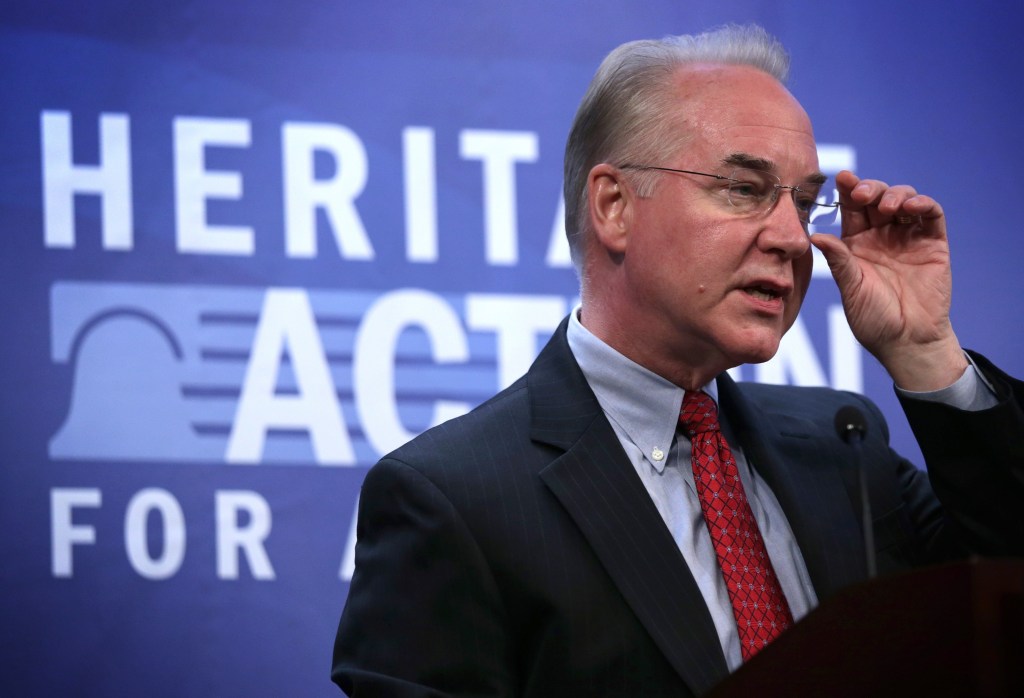
Price provided some clues last week in a speech at the Heritage Foundation. It was a little-ballyhooed appearance at a conference that also included likely GOP presidential candidates.
But hey, only the few and the proud in D.C. get fired up about the budget chairman. It comes with the territory.
Pentagon officials and industry executives echo congressional hawks’ calls for raising defense spending caps. Whether the new House Budget point man will propose doing so will be known by mid-March, when he has to produce his resolution.
If Price is interested in or willing to raise the caps, he didn’t let on at Heritage.
He uttered the word “defense” just once, but only when ticking off things the federal government must do. He did say national security is important, but only in the context that servicing a high debt level takes money away from paying for that security.
To Price and other Republicans, who believe the federal debt is an anchor holding back the United States, in his words, “the problem is spending.
“Now, there are three ways to solve the problem, right?” he said. “You can raise taxes. It’s our favorite way to do that from our friends on the other side of the aisle. Or you can decrease spending.”
Price wants to do the latter.
He clearly believes, as he put it last week, “where the problem is, where the big spending is, is obviously the mandatory, the automatic spending: Medicare, Medicaid and Social Security.”
But Price didn’t mention anything about raising the defense caps.
To that end, his spokesman recently told Defense News that Price “believes we need to address spending priorities within the overall caps.”
Price also talked about passing a budget resolution through a controversial budget tactic known as reconciliation, which would allow the 2011 Budget Control Act to be amended.
But reconciliation only works with the president’s signature making a budget measure binding. Barack Obama simply isn’t going to sign anything that guts domestic programs.
A Republican lobbyist with ties to GOP leaders says all of this means, for the Pentagon and defense sector, “a good year would be buying back some of sequestration by finding savings inside the defense budget.”
Probably wise to start drawing up those 2016 sequester contingency plans.
Email: jbennett@defensenews.com.