When I wondered aloud whether I was becoming too cynical about the current Congress, a fellow congressional reporter responded: “Is that possible?”
At the time, we both chuckled, agreeing that the last few Congresses have caused many to redefine the depths of cynicism. Turns out the answer actually is yes.
I had this affirmation seconds after the Senate Foreign Relations Committee voted 19-0 to send the full chamber a bill that sets the stage for a congressional review and vote on any deal between six world powers and Iran.
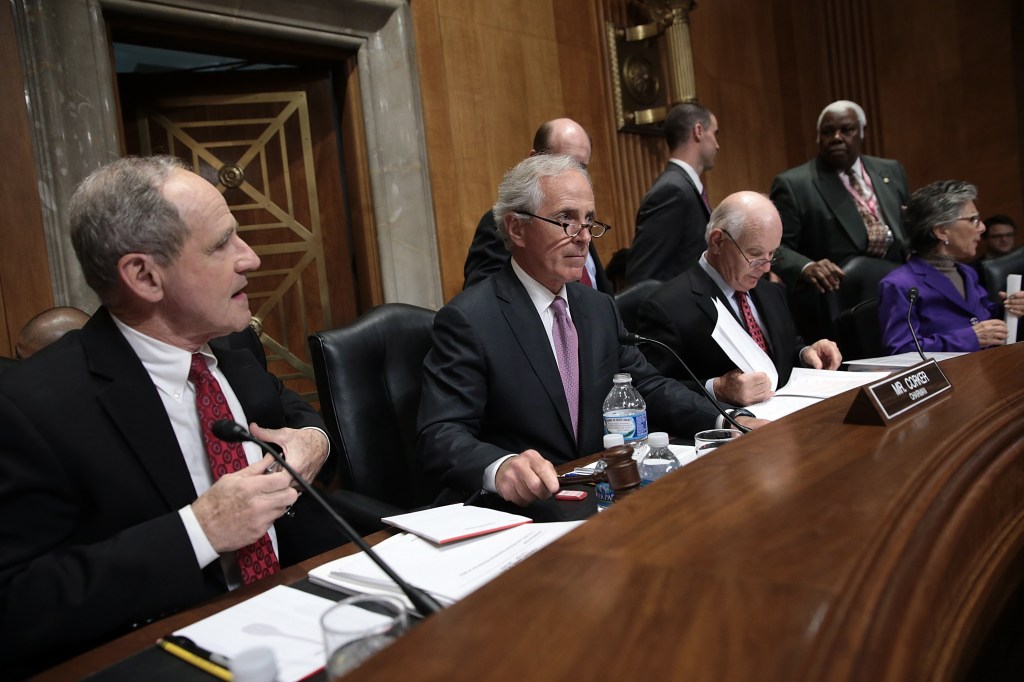
“Didn’t see that coming,” I muttered to myself as Chairman Bob Corker, R-Tenn., gaveled closed a meeting on the legislation after the unanimous, bipartisan vote.
In my last column, I wrote: “On holding a vote on Iran’s nuclear program, there’s bipartisan support. But will both chambers actually ever vote? There are reasons to harbor doubts.”
Senate Majority Leader Mitch McConnell, R-Ky., says he might put the Iran bill on the floor as soon as this week. And House Majority Leader Kevin McCarthy, R-Calif., said once the Senate has acted, House GOP leaders intend to bring it to the floor.
It now appears the Iran legislation — pushed over the finish line by Corker and new committee Ranking Member Ben Cardin, D-Md. — could sail through both chambers with strong support from both parties.

John T. Bennett
Photo Credit: Mike Morones
Cynicism can sow the seeds of doubt, and doubt can blur one’s vision. To put it another way: I got it wrong. At least on the Corker-Cardin bill.
That same column stated “there are reasons to harbor doubts” that both chambers will actually hold floor votes on a measure assessing a potential Iran deal.
I’m sticking to that assessment. That’s because a vote on the Corker-Cardin bill is one to establish a process under which lawmakers would review any deal.
Notably, the legislation would not mandate House and Senate floor action on any eventual Iranian nuclear deal. But it does mention a follow-on “joint resolution stating in substance that the Congress does favor the agreement.”
A Senate Republican aide tells me that vote would indeed be one on any actual Iran deal. If it ever happens.
That vote, which could scuttle a deal by preventing the president from waiving sanctions on Iran put in place by Congress, would be much more politically risky than setting up a review process.
Voters’ eyes glaze over when they hear about Washington process. And no matter what one thinks about Corker-Cardin, it’s a whole lot of process.
My last column stated a vote that could kill an Iran deal, given Republican and Democratic voters’ shared support of a diplomatic solution, “seems risky” for GOP leaders — especially going into an election year.
The Senate GOP aide said that second vote, on a deal-approval resolution, would be subject to “regular order.” That means nearly 50 members of Barack Obama’s own party in the House and over a dozen in the Senate would have to vote with Republicans to essentially kill a deal by overriding an Obama veto.
Once process votes give way to high-stakes policy votes, things get very risky. For Republicans. For Democrats. For the Middle East. For the world.
Email: jbennett@defensenews.com