ORLANDO, Florida – Boeing continues to develop a custom-designed solution for the US Air Force’s T-X trainer replacement program with an eye on contract award in 2017 — but a company official indicated Monday that a preview of what that may look like is still a ways away.
Asked by reporters about Boeing’s T-X offering, Bob Gower, vice president of Boeing Defense’s training systems and government services group, said, “We have not defined the timeframe that we will roll out the family of systems, including the new aircraft,” before smiling and noting that comment probably left reporters “wanting.”
Indeed, Boeing’s plans for T-X are a closely guarded secret. Almost nothing about the design itself has leaked.
What is known is that Boeing is teamed up with Sweden-based Saab to develop the aircraft for an off-the-shelf custom design geared to meet the Air Force’s requirements. However, Boeing officials, including defense head Chris Chadwick, have insisted the plane will not be a modified version of Saab’s Gripen fighter.
“Our design process is moving along very smartly and we will be able to fly in a timely fashion to show the Air Force that this is a viable option,” Chadwick said in July “We’re going to see how it all plays out and how the requirements come together that will determine what we need to do to compete.”
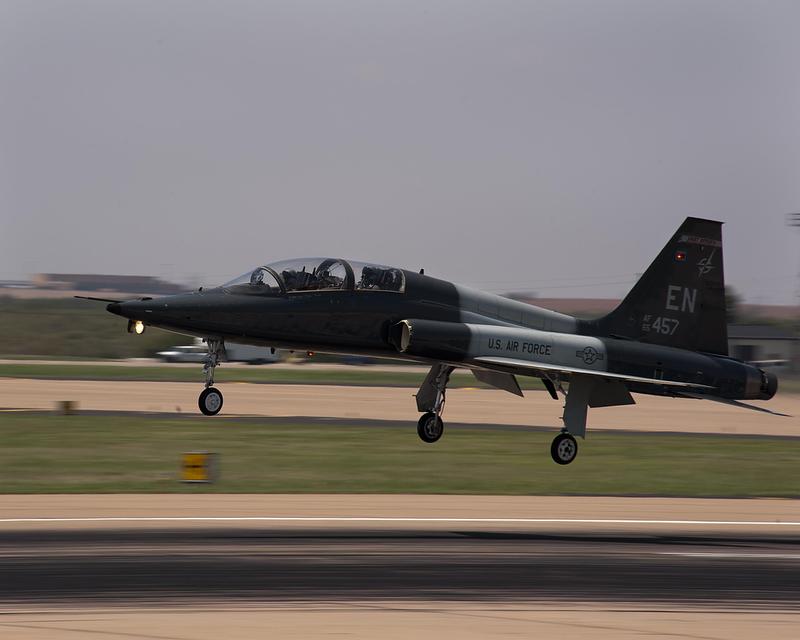
The winner of the T-X competition will replace the service’s T-38 trainers with 350 new aircraft, a contract that has drawn significant interest.
Boeing is facing off against the Hawk Advanced Jet Training System, a joint program led by BAE Systems and Northrop Grumman; Lockheed Martin’s offering of Korean Aerospace Industries’ T-50; and the T-100, a collaboration between General Dynamics and Italy’s Alenia Aermacchi based on the latter’s M-346 design. Textron AirLand is also offering a trainer variant of its new Scorpion jet in the competition.
Gower said that the company is proceeding on assumptions the Air Force will keep to its planned schedule for the program. And while the budget for T-X appears solid for now, budget maneuvering in the next Congress could easily move the program to the right, as Gower acknowledged.
“All indications we see is the customer is maintaining to their schedule, which is trying to get to a decision in 2017 and [initial operating capability] in 2023,” he said. “There will be budget fights, we’ll see where budget fights come out; but for us we’re tracking to that, and all our family of systems is being developed based on that timeline.” ■
Email: amehta@defensenews.com.
Digital Show Daily