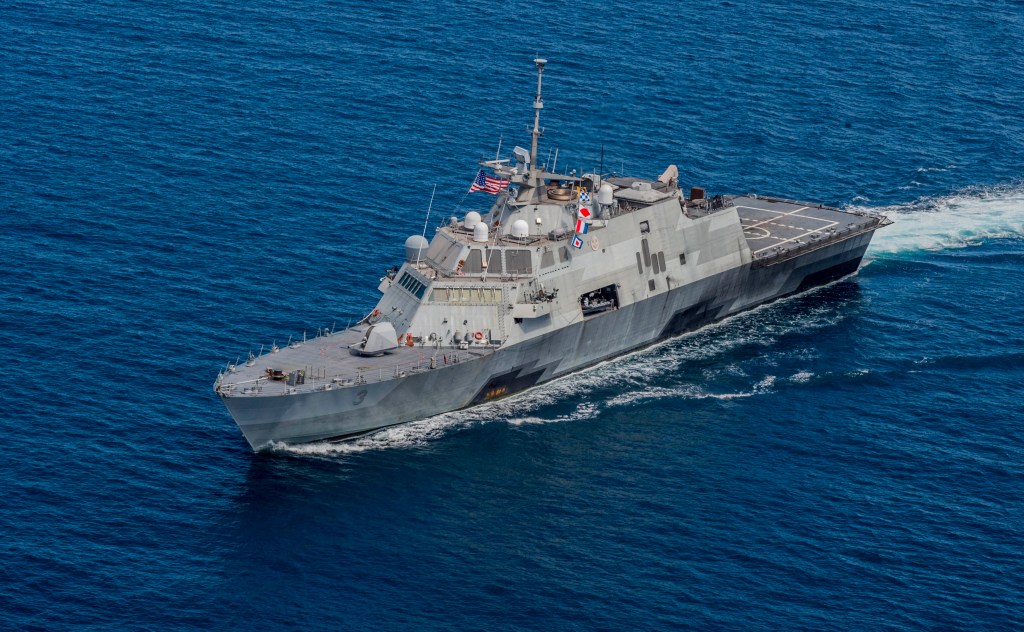
WASHINGTON — The Navy’s first four littoral combat ships will be headed into mothballs next March, according to a June 20 message from the chief of naval operations.
The littoral combat ships Freedom, Independence, Fort Worth and Coronado will all be inactivated on March 31, 2021, with Coronado being commissioned just six years ago.
The Navy decided to cut the ships to save money on modernization efforts as it faces a mountain of shipbuilding bills and upgrade costs.
The ships were supposed to be used as test vessels for the continued standing up of the LCS class, but LCS 1 through 4 have just about reached the end of their usefulness as test vessels and are no longer worth a deeper financial investment, according to a February briefing by Rear Adm. Randy Crites, the deputy assistant secretary of the Navy for budget.
“Those four test ships were instrumental to wringing out the crewing, the maintenance and all the other things we needed to learn from them,” Crites told reporters. “But they’re not configured like the other LCS in the fleet, and they need significant upgrades. Everything from combat [systems], to structural, you name it. They’re expensive to upgrade.”
The ships will be put in inactive reserve status, which means they could conceivably be reactivated if needed in a crisis.
Split between two variants — a line of traditional steel monohull warships and another featuring an aluminum trimaran design — the LCS was intended to serve as a fast and nimble warship, capable of morphing into a minesweeper, anti-submarine vessel or ship killer.
But Crites said the first four ships had become less relevant for “great power competition” and that money could be spent on better options.
“They’ve played an important role and we’ve certainly ramped up our employment [of the LCS],” Crites said. “That’s a good thing. But when we looked at our return on investment and the cost of bringing those ships up to speed, they’re important, but in the context of great power competition they were less important. So we took those savings and applied it to other areas.”